North Sea shrimp belong to the coast just like the dike and the mudflats – and right now, in autumn, it is their main season. Yet there is more to them than meets the eye on a shrimp roll: the German "Krabbe" is not a crab at all, it is cooked while still on the boat, and before it reaches the shops in Germany peeled, it has usually been to Morocco and back.
Here you can find out how the shrimp are caught, why autumn is the main season, why they take the detour via North Africa – and where around Otterndorf you can see shrimp boats and get a shrimp roll.
At a glance
| What it is | Brown shrimp (Crangon crangon), called "Krabbe" in German, "Granat" in East Frisia |
| Main season | Autumn; in winter (roughly late November to February) little or nothing is caught |
| Processing | cooked on board in seawater, peeled as a rule by hand in Morocco |
| See the boats | three cutter harbours on the Wurster North Sea coast: Spieka-Neufeld, Dorum-Neufeld, Wremen |
| Eat & buy shrimp | Cuxhaven (harbour, Fischmeile), sales stalls on the south pier in Wremen |
| From Nordseezimmer | Cuxhaven around 17 km, Spieka-Neufeld around 29 km, Dorum-Neufeld around 41 km by car |
| More info | Thünen Institute of Sea Fisheries (German) |
Crab or shrimp? What's really on your bread
Strictly speaking, the North Sea "Krabbe" is a shrimp. Its scientific name is Crangon crangon, and in English it is known as the brown shrimp – "Krabbe", the German word for crab, is just the colloquial name. Zoologically, crabs are short-tailed crustaceans, a different group of animals. A fully grown brown shrimp reaches up to 9.5 centimetres in length. In East Frisia it is called "Granat", in North Frisia "Porren".
Alive, it looks quite different from how it looks on the plate: greyish-brown and matched in colour to the mudflat floor. Pigment cells in its shell make that possible. It also buries itself just below the surface of the sand to hide from birds, fish and young seals. Only when it gets dark does it come out to feed. It lives mostly where rivers flow into the sea – exactly the kind of area where Otterndorf lies, at the mouth of the Elbe.
If you'd like to see the mudflats for yourself, read our guide Mudflat hiking for beginners.
From the seabed to the cooking pot: how shrimp are caught
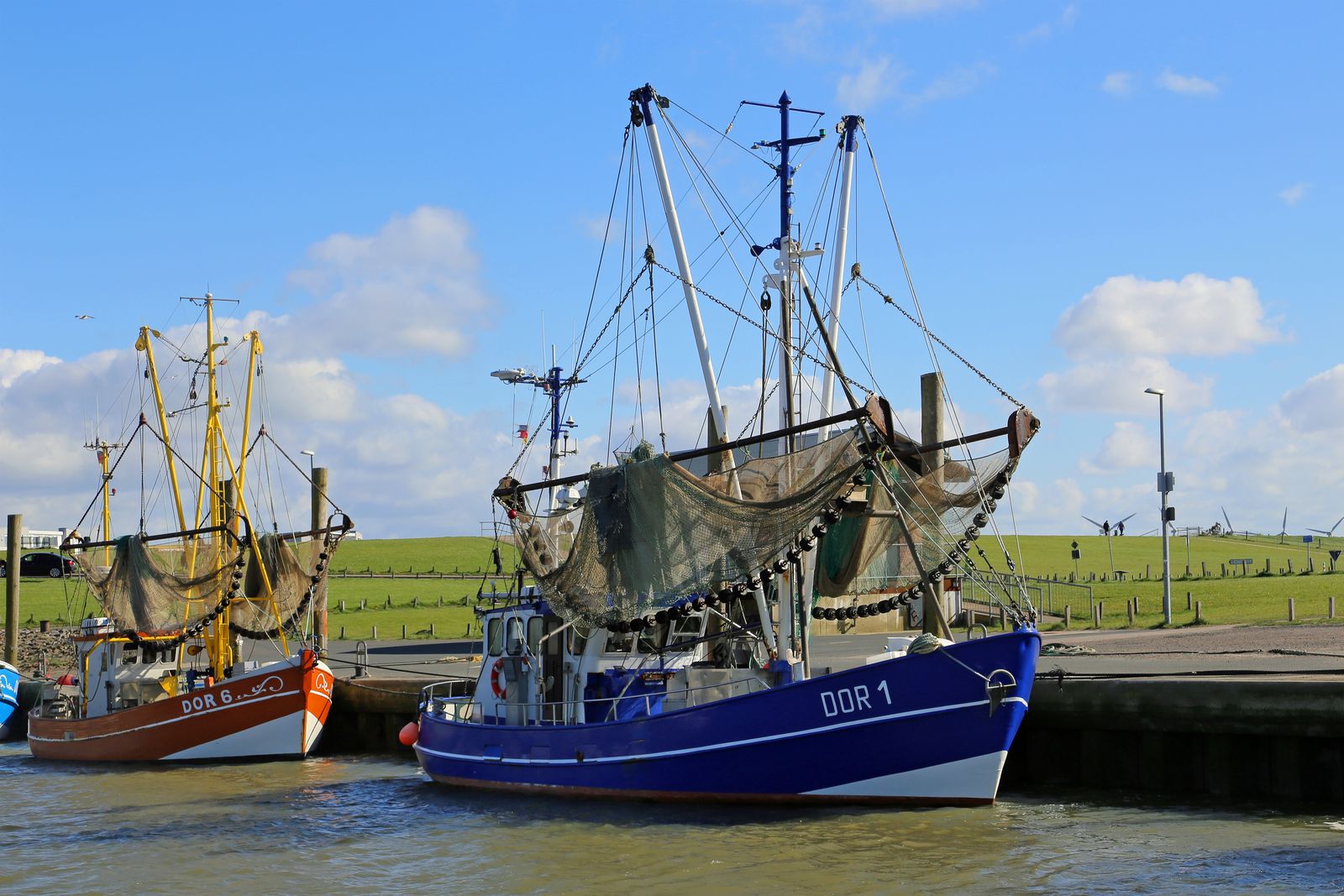
Brown shrimp are caught from shrimp boats using bottom trawl nets. The two booms on the left and right of the boat are typical: the nets are lowered into the water from them at the sides and pulled over the seabed on rollers. In the photo above, the booms are raised. Fishing takes place mainly in coastal waters near river mouths, especially around the Eider and the Elbe.
The special part happens right on board: after sieving, the shrimp are cooked fresh from the catch in seawater, in a cooking pot filled with water taken straight from the sea. Only then do they take on their typical reddish-brown colour. The shrimp therefore usually leave the boat already cooked.
Season: autumn is the main catch
The brown shrimp lives on a one-year cycle. It grows quickly, and the shrimp caught in autumn hatched in spring. Autumn is the main fishing season. In the cold months, roughly from late November to February, the shrimp retreat into deeper waters, and less or nothing is caught.
How good a season will be is hard to predict. Even the number of predators that eat the shrimp varies from year to year and sometimes within a few weeks. Autumn 2025, for example, was an exceptionally good season according to the Thünen Institute of Sea Fisheries, with catches more plentiful than they had been for years.
For you, this means: if you come to the coast in October or November, it is shrimp season. Why the off-season is worth it for other reasons too is covered in The North Sea in autumn.
Bookable from 1 night, no single-room supplement, private parking space – handy for trips to the cutter harbours. The tourist tax is already included in the price.
Check availabilityWhy North Sea shrimp travel to Morocco
Now to the question almost everyone has heard at some point: is it true that North Sea shrimp are peeled in Morocco? Yes. According to the Thünen Institute, North Sea shrimp are as a rule peeled by hand in Morocco and then brought back to Germany as processed goods. The route mostly runs via the Netherlands to Morocco, where the shrimp are peeled in large peeling centres. For the return journey they are preserved several times.
The reason is simple: peeling shrimp is manual work, and manual work is very expensive in Germany.
The Covid pandemic showed how vulnerable this system is. When peeling capacity in Morocco was sharply reduced during the pandemic, wholesalers bought fewer shrimp – and the catches and earnings of German shrimp fishers fell. A Thünen Institute project addresses exactly this: together with partners, it has looked into whether shrimp could be peeled by machine directly in the fishing region, using a machine that breaks open the shell with pressure waves.
If you want to eat shrimp without this detour, there is one option: buy unpeeled shrimp where they are available and peel them yourself.
Peeling them yourself: how it works
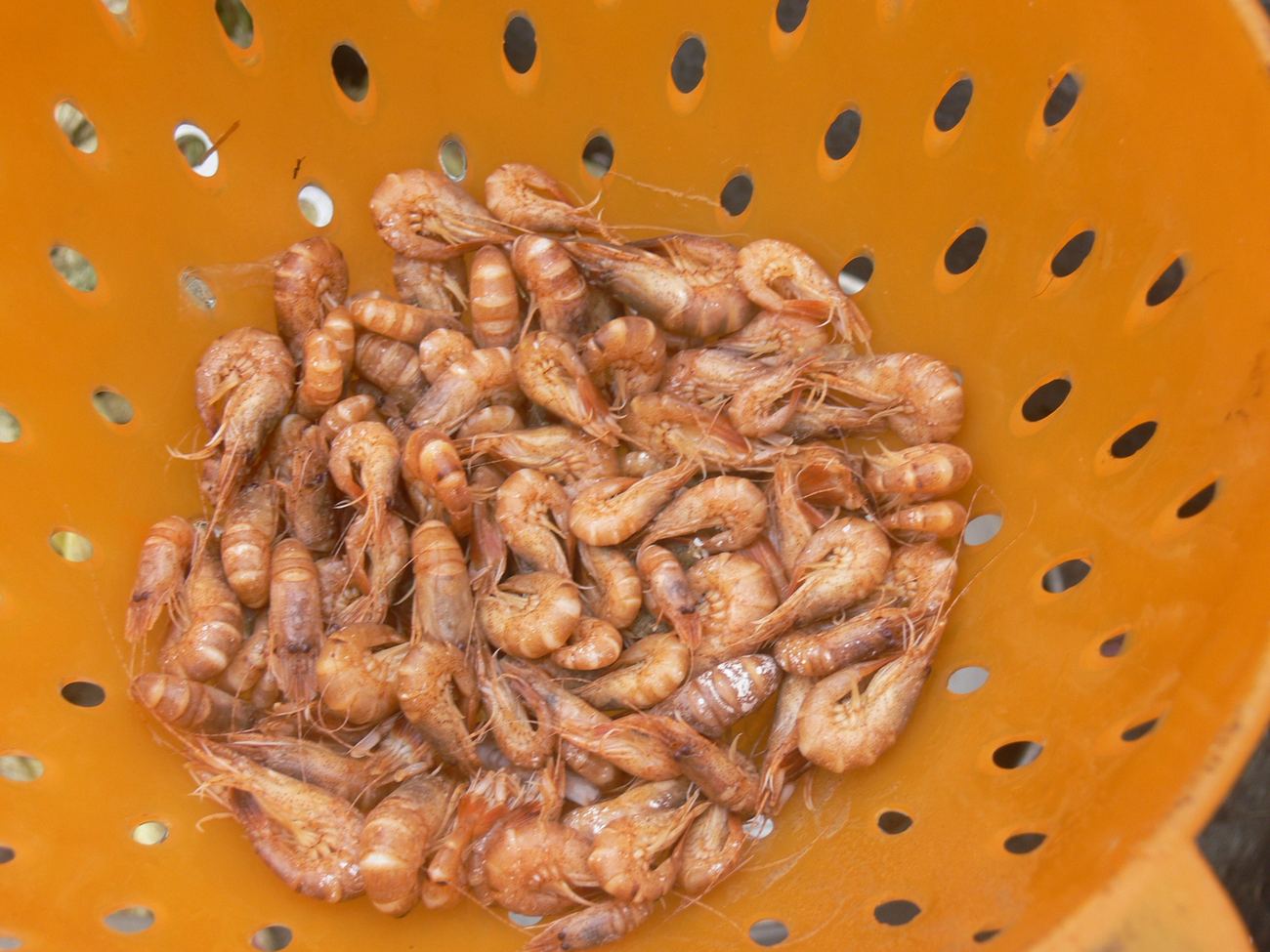
Here is how the technique works:
- Hold the shrimp with the thumb and index finger of both hands – one hand at the head, the other at the tail end.
- Twist the rear part without pressing until the shell breaks open.
- Pull the shrimp meat out of the rear shell first, then out of the head end.
Important when buying: shrimp spoil easily. So it is best to buy unpeeled shrimp only when you plan to eat them soon.
Shrimp in the kitchen: rolls, open sandwiches and scrambled eggs
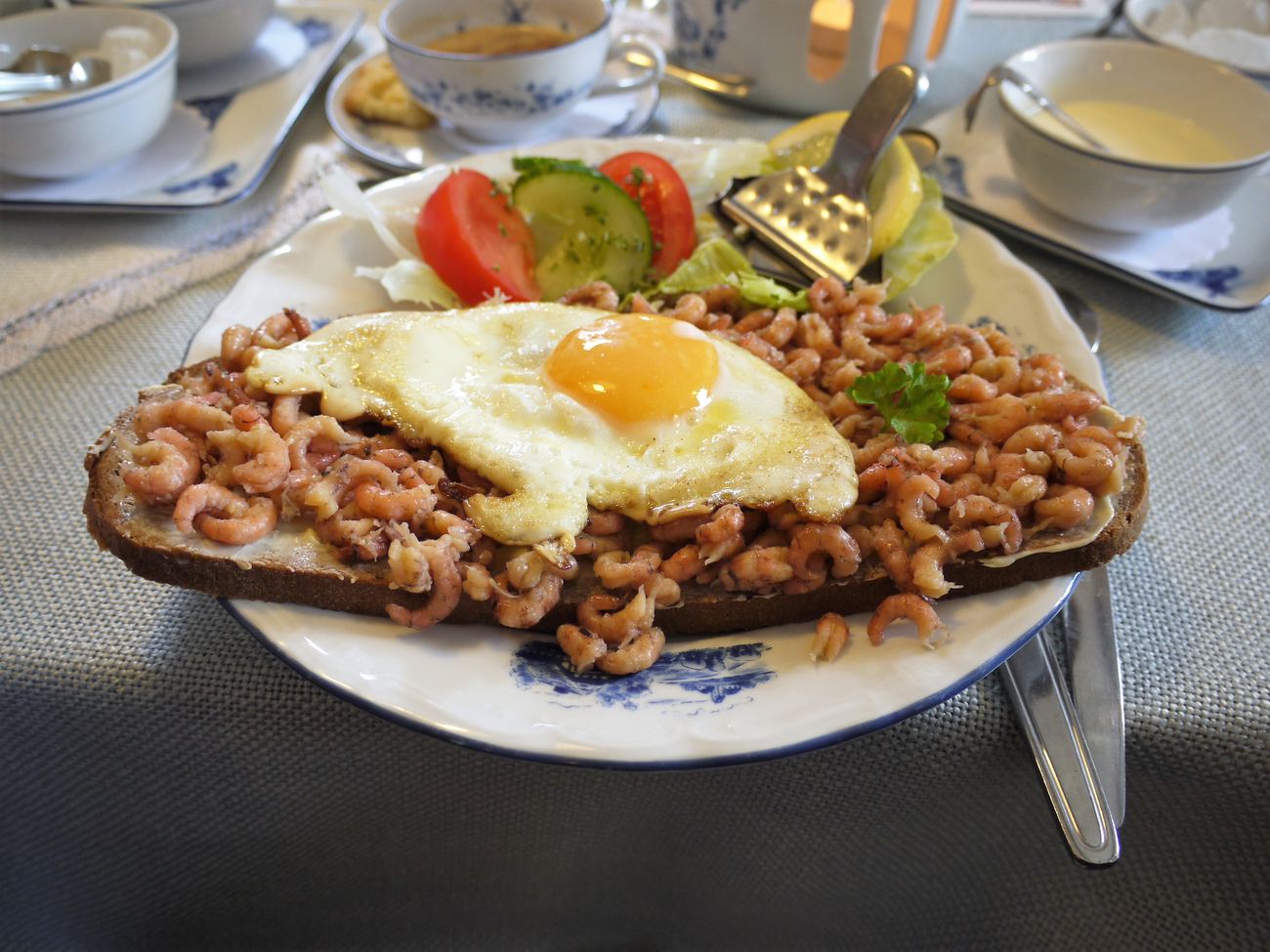
Coastal cooking doesn't need much for shrimp. The classics are the Krabbenbrötchen (shrimp roll), the Krabbenbrot (shrimp on bread), shrimp with scrambled eggs, shrimp salad and shrimp soup.
The easiest way to try them is as a shrimp roll, for example at the sales stalls on the south pier in Wremen. In Cuxhaven, plaice and shrimp are among the specialities in restaurants, snack bars and bistros.
Where to find shrimp around Otterndorf
Cuxhaven: the Fischmeile in the fishing harbour
Cuxhaven is around 17 kilometres from Nordseezimmer. The Fischmeile ("fish mile") in the Old and New Fishing Harbour offers fish, factory outlets and restaurants, and access is free. In Cuxhaven you can get smoked fish, matjes herring or shrimp, and at the harbour you can watch the fishermen at work. Opening hours of the individual shops and restaurants vary, so a quick check beforehand is worthwhile. What became of the old fish market is explained in Fish market Cuxhaven. If you want to dig deeper into the history of fishing, visit the Windstärke 10 wreck and fisheries museum.
Wurster North Sea coast: three cutter harbours
You can see real shrimp boats on the Wurster North Sea coast in the district of Cuxhaven. There are three cutter harbours there: Spieka-Neufeld in the north, around 29 kilometres from us, Dorum-Neufeld, around 41 kilometres, and Wremen, the oldest and southernmost of the three. On many days of the year you can watch the colourful boats setting out on a fishing trip or returning home.
In Dorum-Neufeld, the Dorumer Hafentage harbour festival includes shrimp-peeling workshops and a boat parade. In Wremen you will find sales stalls with shrimp and fish rolls on the south pier. The shrimp boat "Claudia" there has also been converted for passenger trips – with excursions and real fishing trips. Dates and prices are available directly from the operator.
You will find more destinations in the area in Day trips from Otterndorf.
If you want to peel them yourself, ask the fishmonger whether they have unpeeled shrimp. If you come in autumn, you'll hit the main fishing season. You can also practise peeling at the shrimp-peeling workshops of the Dorumer Hafentage – for dates, ask the Kurverwaltung Wurster Nordseeküste (local tourist office).
Back to Nordseezimmer
For trips to Cuxhaven and the Wurster coast, Otterndorf is well placed. You stay in Koje, maritime with a petrol-blue accent wall, or in Koi in warm gold and cream tones – both with a private bathroom, a large 180×200 bed, free Wi-Fi and a private parking space. Thanks to self check-in via a key box, you can arrive around the clock, even if your day at the harbour runs late. Both rooms can be booked from one night, with no single-room supplement.
And if you need some fresh air after your shrimp roll: the Elbe is around 15 minutes' walk from us.
Frequently asked questions
Why are North Sea shrimp called “Krabben” in German when they are shrimp?
“Krabbe” is the colloquial name. Biologically, the North Sea “Krabbe” is a shrimp – the brown shrimp (Crangon crangon). Crabs in the zoological sense are short-tailed crustaceans. In East Frisia the brown shrimp is also called “Granat”, in North Frisia “Porren”.
When is shrimp season on the North Sea?
The main fishing season is autumn. The shrimp caught then hatched in spring. In the cold months, roughly from late November to February, they retreat into deeper waters, and less or nothing is caught.
Are North Sea shrimp really peeled in Morocco?
Yes, as a rule. According to the Thünen Institute, the shrimp are mostly taken via the Netherlands to Morocco, peeled by hand in large peeling centres there and delivered back to Europe after being preserved several times. The reason: manual work is very expensive in Germany. If you want to avoid the detour, ask for unpeeled shrimp and peel them yourself.
Where can I see shrimp boats near Otterndorf?
There are three cutter harbours on the Wurster North Sea coast: Spieka-Neufeld (around 29 km from Nordseezimmer), Dorum-Neufeld (around 41 km) and Wremen. In Cuxhaven, around 17 km away, you will find the Fischmeile in the Old and New Fishing Harbour.
How do I peel shrimp properly?
Hold the shrimp with the thumb and index finger of both hands at the head and tail end. Twist the rear part without pressing until the shell breaks open. Then pull the meat out of the rear shell first and then out of the head end.
Shrimp season on the coast, nights in Otterndorf
Bookable from 1 night, no single-room supplement, tourist tax included. Two rooms in Otterndorf – Koje and Koi.
Check availability now View the rooms9.2 / 10 on Booking.com · Catharinenweg 4, 21762 Otterndorf