A storm surge sounds like a disaster, but at the Elbe estuary it is first of all a measurement: the Federal Maritime and Hydrographic Agency (BSH) only speaks of a storm surge when the water level is more than 1.5 metres above mean high water. This article explains what the levels are called, where warnings come from and what that means for your visit to Otterndorf.
We are not a warning authority. The article explains where to find reliable information and presents an attraction that deals with exactly this topic. All details are as of 20 October 2026.
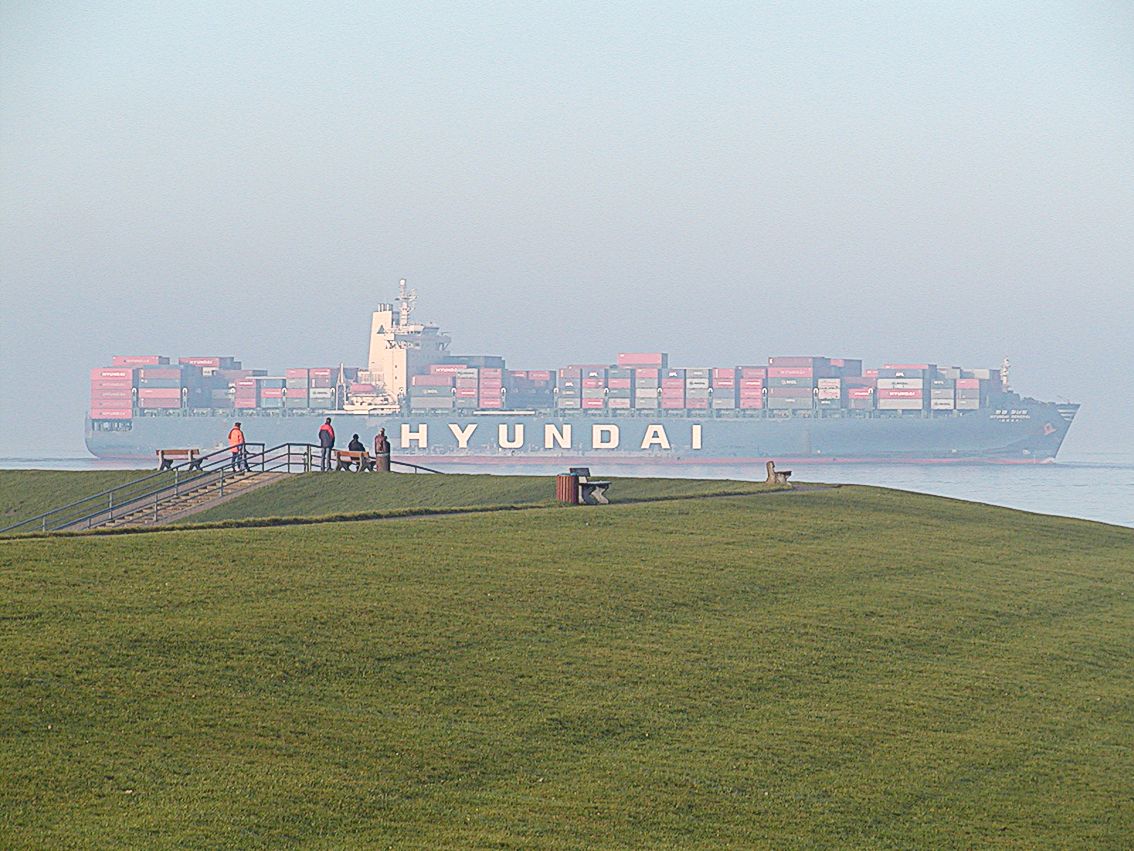
At a glance
| Storm surge (BSH) | from 1.5 m above mean high water |
| Severe storm surge | from 2.5 m above mean high water |
| Very severe storm surge | from 3.5 m above mean high water |
| Warnings | BSH website, radio, the German Weather Service's WarnWetterApp; BIWAPP warning app (free) |
| Natureum Niederelbe | Balje, special exhibition “Sturmflut 1976” until 1 November, guided tour on 25 Oct, 2 pm |
| From Nordseezimmer | Elbe approx. 15 min. on foot, approx. 5 min. by bike; Natureum approx. 13 km (by car) |
| More info | North Sea storm surge warning service (BSH, in German) |
What the warning levels mean
Warnings for the German North Sea coast come from the BSH in Hamburg. The reference point is mean high water (MHW), the BSH's baseline value. The BSH issues official storm surge warnings from a water level of more than 1.5 metres above this value. Three levels apply:
| Level | Water level above mean high water |
|---|---|
| Storm surge | from 1.5 m |
| Severe storm surge | from 2.5 m |
| Very severe storm surge | from 3.5 m |
Cuxhaven is one of the main gauges for which the BSH produces forecasts, four times a day: at 1 am, 8 am, 2 pm and 8 pm. The levels apply to the German North Sea coast as a whole.
Where to get warnings
Warnings come via the BSH website, radio and the German Weather Service's WarnWetterApp. There is also a paid telephone warning service that alerts at lower water levels. For a holiday, the website, radio and a warning app are enough.
For the Cuxhaven district there is also the free warning app BIWAPP, with warnings and current information for the district. Installed before you travel, it puts the alerts on your phone.
Bookable from 1 night, no single-room surcharge, tourist tax included. Two rooms in Otterndorf – Koje and Koi.
Check availabilityHow the coast is protected
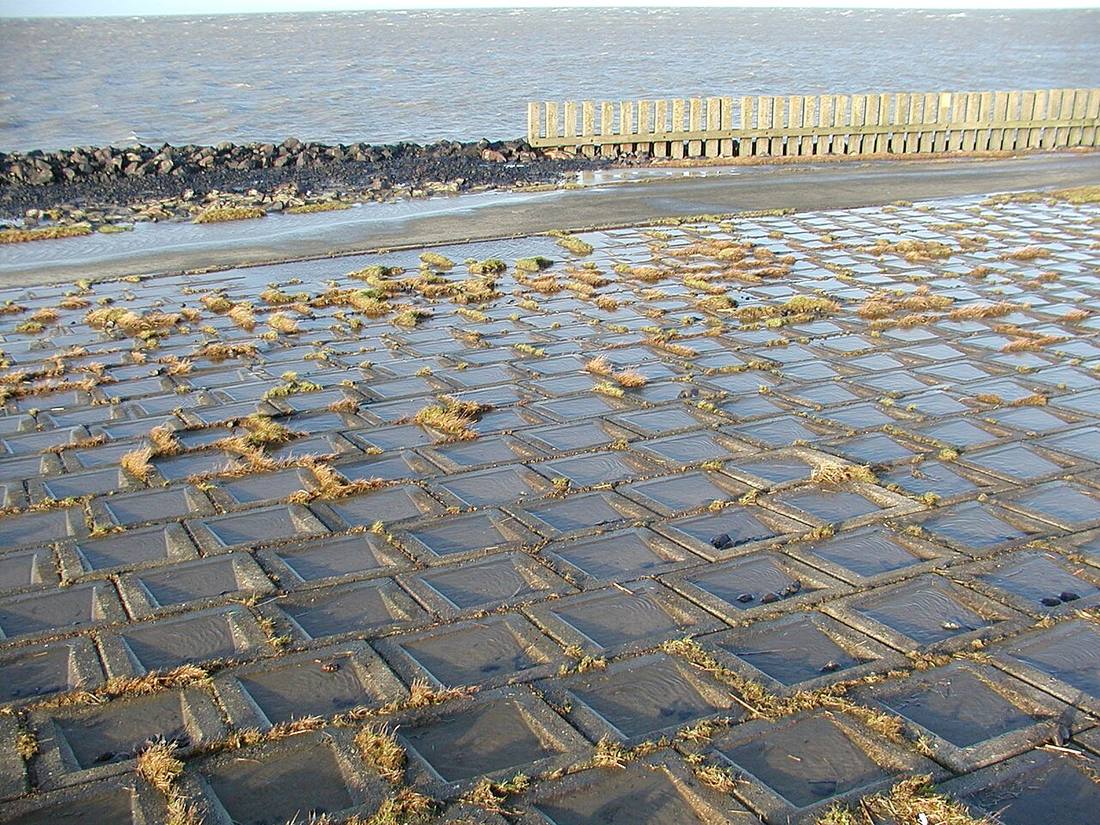
About two thirds of the Cuxhaven district are protected from storm surges, directly or indirectly, by dikes together with revetments, groynes and sluices. Six dike associations look after around 152 kilometres of dikes along the Weser, Elbe and Oste. During storm surges, dike defence is also organised so that the dikes do not come to harm.
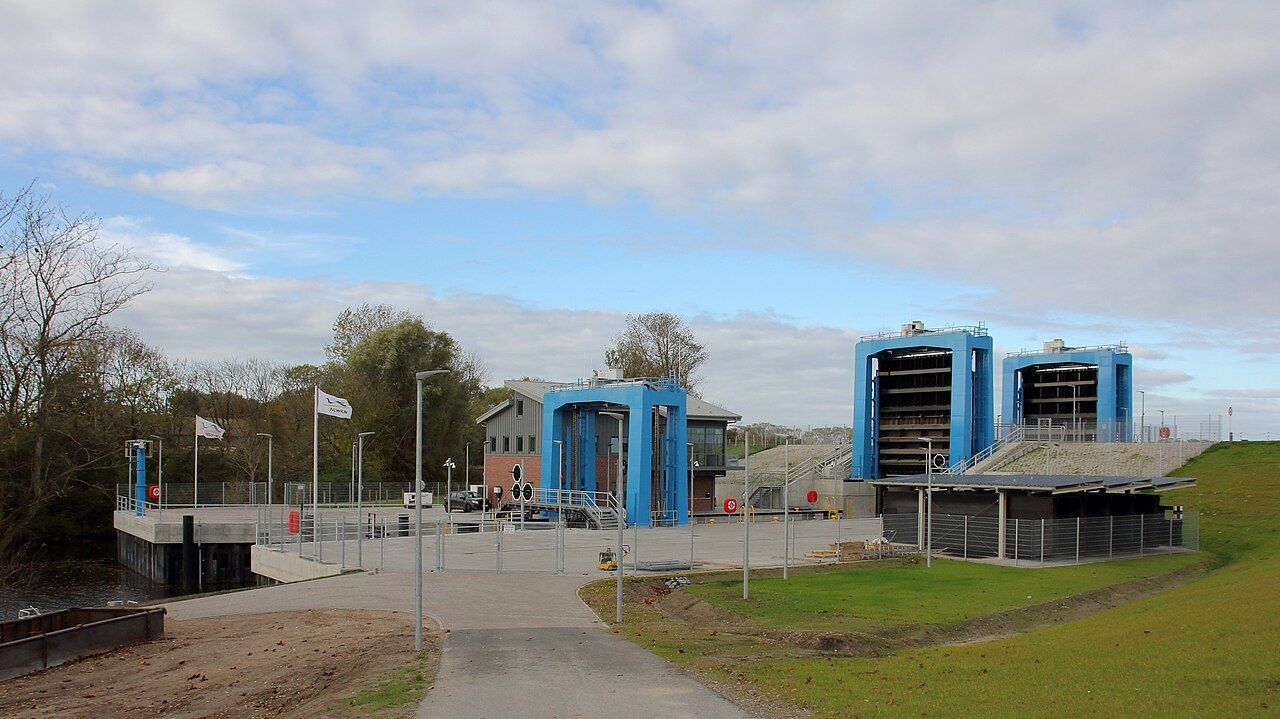
In Otterndorf itself, the Hadelner Kanalschleuse (Hadeln canal lock) is part of this. It has several functions, including coastal protection against storm surges. The present structure was completely rebuilt between 2019 and 2022 and is operated by the State of Lower Saxony through its agency NLWKN. You can read more in our article on Otterndorf harbour.
Walking on the dike – and what to bear in mind
The dike is a protective structure, not a park. The Cuxhaven district authority writes that the dike associations tolerate walking on the dike in many places, often on paved dike-crest paths or where signs show it. There is no legal right to do so, and maintaining dike safety takes priority. If you cycle, stay on the paved surfaces.
Heed the signs. Wolf-proof fences can carry a high-voltage current and must not be touched.
The district's page names no separate rule for walkers during a storm surge warning. Our advice is therefore: if a warning is out for the Elbe, skip the walk on the dike and spend a day at, for example, the Sole-Therme instead. For more on the tides, see Understanding ebb and flow.
Natureum Niederelbe: exhibition on the 1976 storm surge
If you want to understand what “storm surge” has meant for the region, the Natureum Niederelbe in Balje has a special exhibition: “Sturmflut 1976 – eine Region erinnert sich” (“Storm surge 1976 – a region remembers”). According to the Natureum's homepage it runs until 1 November. Visitors experience, among other things, the Hamburg sea weather office, where the forecasts become more dramatic by the hour, and a dike that threatens to break. Eyewitnesses have their say, and the exhibition also covers the coastal protection measures that followed the storm surges of 1976 and 1962, along with an outlook on climate change and sea-level rise.
The events calendar lists a public guided tour “Sturmflut 1976” on Sunday, 25 October, from 2 to 3:30 pm. The calendar does not say whether it is included in the admission price or whether you need to register – call 04753 842110 beforehand.
Until 1 November the Natureum is open Tuesday to Sunday and on public holidays from 10 am to 6 pm, then from 3 to 30 November on Saturdays and Sundays only, 10 am to 5 pm. Admission for adults is €11 in the main season, €6 for children up to 16. It is about 13 kilometres from Nordseezimmer; more about the museum in Day trips from Otterndorf.
Take a quick look at the BSH site in the morning and install the warning app BIWAPP before you travel for alerts from the district. Then you know whether the afternoon holds a walk on the dike or whether you would rather head to the Natureum or the spa.
Back to Nordseezimmer
From Catharinenweg it is about a 15-minute walk to the Elbe, or about 5 minutes by bike. You stay in the Koje, maritime with a petrol-blue accent wall, or in the Koi in warm gold and cream tones, both with a private bathroom, a 180×200 bed and free Wi-Fi. With self check-in via key box you can arrive at any hour, and coffee and tourist tax are included.
Why the quieter months have their own appeal on the coast is covered in The North Sea in autumn.
Frequently asked questions
At what level does a storm surge begin?
According to the BSH's classification, from a water level of 1.5 metres above mean high water. A severe storm surge begins at 2.5 metres, a very severe one at 3.5 metres above mean high water.
Where can I find storm surge warnings for the Elbe estuary?
The BSH distributes its warnings via its own website, radio and the German Weather Service's WarnWetterApp. For general warnings and information in the Cuxhaven district there is also the free warning app BIWAPP.
Am I allowed to walk on the dike?
The dike associations tolerate it in many places, often on dike-crest paths or where signs indicate it. There is no legal right to it, and dike safety takes priority. Signs apply, and wolf-proof fences can be live.
How long does the storm surge exhibition at the Natureum run?
According to the Natureum Niederelbe homepage, the special exhibition “Sturmflut 1976 – eine Region erinnert sich” runs until 1 November. A public guided tour is listed in the events calendar for Sunday, 25 October, 2 to 3:30 pm (as of 20 October 2026).
How much does the Natureum Niederelbe cost?
In the main season until 1 November adults pay €11 and children up to 16 pay €6; the family ticket costs €28. From 3 to 30 November the off-season rate applies: €9 for adults and €5 for children (as of October 2026).
The Elbe a short walk away, a room for the night
Bookable from 1 night, no single-room surcharge, tourist tax included. Two rooms in Otterndorf – Koje and Koi.
Check availability now View the rooms9.1 / 10 on Booking.com · Catharinenweg 4, 21762 Otterndorf