Twice a day, the water pulls back along the North Sea coast and lays bare the mudflats – then it returns. Spend a few days here and you quickly notice: life on the coast runs on the tides, not the clock. This guide explains how tides form, why the tidal range on the North Sea is so much bigger than elsewhere, what wildlife depends on it – and what you need to know before you go onto the mudflats yourself.
At a glance
| Rhythm | 2× high tide + 2× low tide per day, timing shifts by roughly 50 min. daily |
| Tidal range, German North Sea | around 3 metres |
| Spring / neap tide | 2–3 days after full/new moon or half moon |
| World Heritage status | since 26 June 2009 (UNESCO) |
| Current tide times | BSH tide portal (German Federal Maritime Agency) |
| From the Nordseezimmer | around 15 min. on foot, roughly 5 min. by bike to the Elbe estuary |
How tides form
Tides are caused by the gravitational pull of the moon: it draws the earth's water towards it – a tidal bulge forms on the side facing the moon, and at the same time a second bulge forms on the opposite side. A flood phase lasts around 6 hours and 15 minutes, and so does an ebb phase. A full tidal cycle – from one high tide to the next – therefore comes to about 12.5 hours. That's why the North Sea gets two high tides and two low tides a day.
From one high tide to the one after next takes around 24 hours and 50 minutes – which is why the timing shifts by roughly 50 minutes later each day. If high tide was at 2pm today, it won't be back until around 2:50pm tomorrow. The tidal wave also doesn't reach the whole coast at once: high tide on Borkum comes around six hours earlier than in Brunsbüttel.
How big the North Sea's tidal range is – and what makes it vary
On the German North Sea coast, the tidal range – the difference in height between high and low tide – is around three metres. On the Schleswig-Holstein Baltic coast, by comparison, it's only about 20 centimetres. How high any given tide runs also depends on the moon's position: when the sun, earth and moon line up – at full or new moon – their gravitational pulls add together and the tide runs higher than usual: a spring tide. At the half moon, the sun and moon instead pull against each other, and the tide stays lower – a neap tide. In the Wadden Sea, neither occurs exactly on the day of the full, new or half moon, but two to three days later.
From the Nordseezimmer it's around 15 minutes on foot to the Elbe, about 5 by bike – close enough to watch the tide turn in person.
Check availabilityThe mudflats as a larder – when millions of birds come to feed
What looks to us like an empty stretch of sand is a laid table for countless animals. At high tide, the North Sea repeatedly washes nutrient-rich water over the mudflats – food for worms, snails, mussels, crabs and shrimp. At low tide they burrow back in – and that's exactly when their predators, the wading and water birds, arrive: they probe the mud with their beaks for hidden prey, each beak shaped and sized for particular mudflat dwellers.
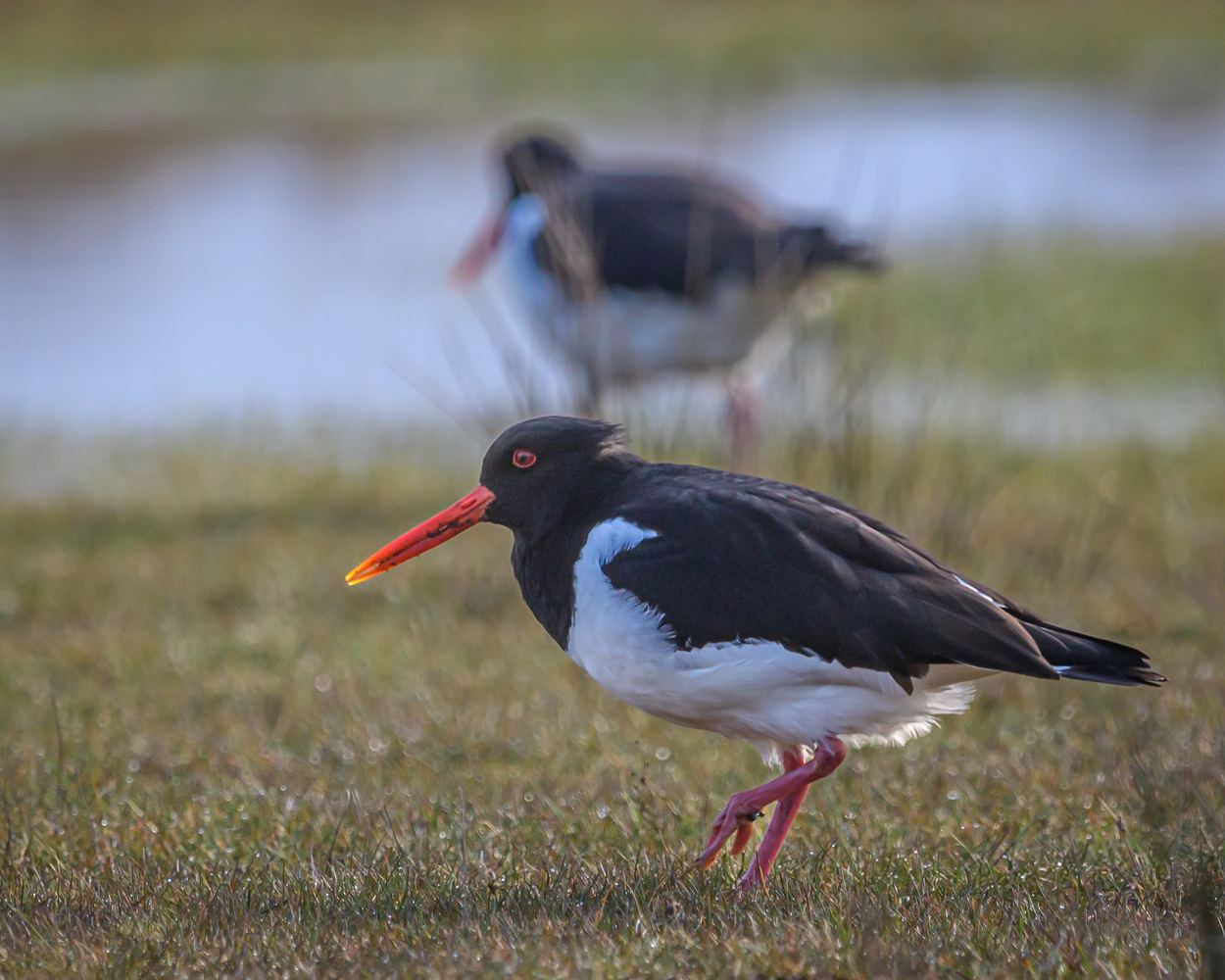
This is why the Wadden Sea hosts around 10 million migratory birds every autumn and spring, with more than 400 bird species recorded there in total.
World Heritage Site since 2009
The Wadden Sea owes its character to exactly this tidal rhythm – which is why people speak of it "breathing". UNESCO recognised as much: on 26 June 2009, the German-Dutch part of the Wadden Sea was inscribed on the World Heritage List. The Hamburg Wadden Sea was added in 2011, and the Danish part followed in 2014, along with a seaward extension of the Lower Saxony Wadden Sea.
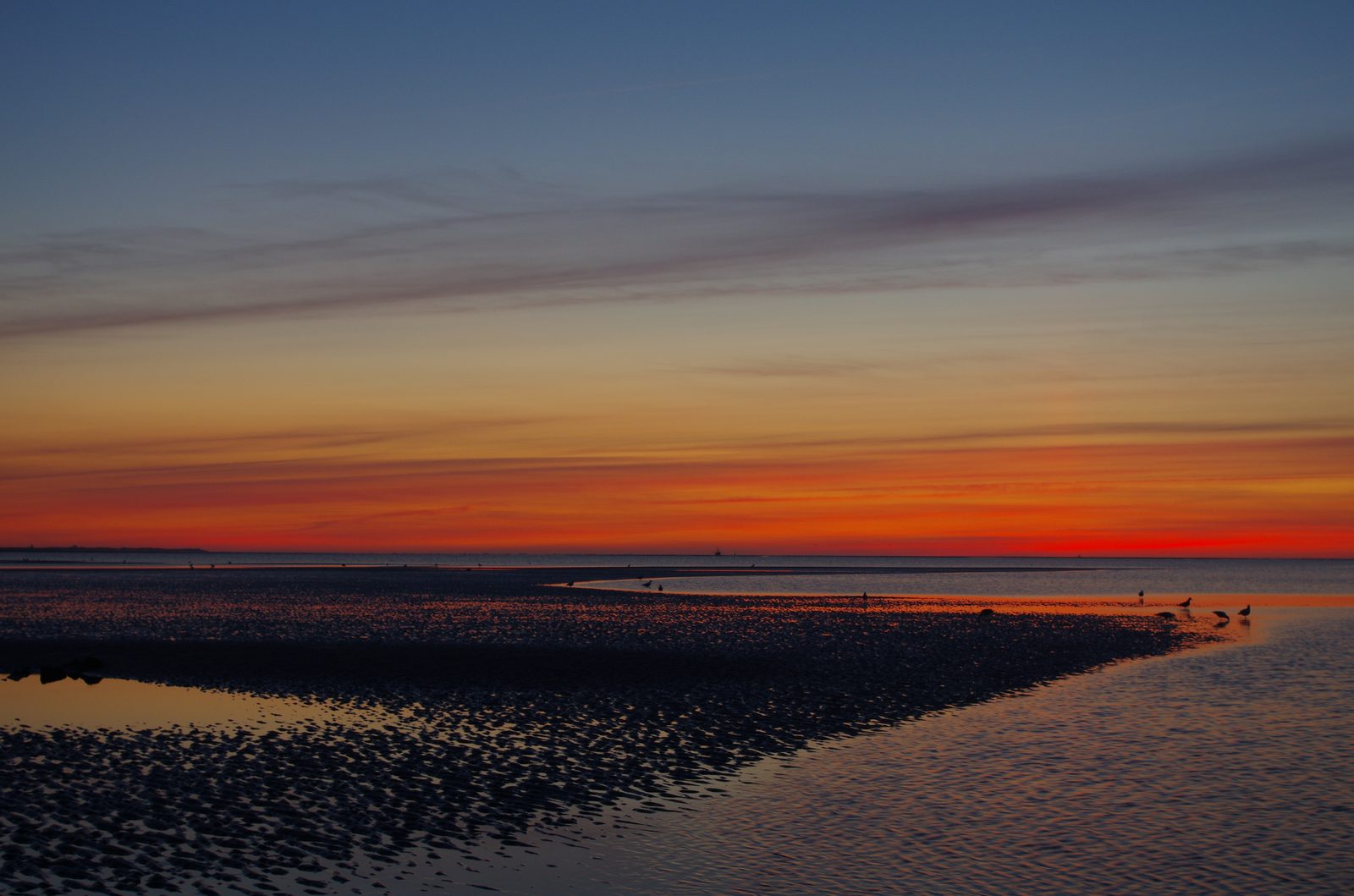
The tide is most striking at dusk or dawn, when low light makes the wet mudflats glow. You'll find the tide calendar for your travel dates in the table above.
Staying safe on the mudflats
The mudflats are no place for spur-of-the-moment decisions. The Wadden Sea National Park sets out clear rules: never go onto the mudflats alone, and don't walk far out without a certified mudflat guide. Watch the tides and leave the mudflats no later than three hours after high tide. Always carry a phone with signal. Never cross tidal creeks – they can look harmless but fill unnoticed at high tide and turn into fast-flowing channels you can no longer cross on the way back. Never head onto the mudflats when there's a risk of thunderstorms or an official severe-weather warning from the German Weather Service, and keep an eye on the sky: sea fog can arrive without warning and cut visibility within minutes.
Stick to these rules and a guided mudflat walk, and the experience is a relaxed one – we've put together timings, the starting point and prices for guided tours from Otterndorf in a separate article on low tide in Otterndorf.
Back at the Nordseezimmer
Otterndorf sits right at the Elbe estuary, where the river meets the North Sea – you can read more about that in our article on the Otterndorf harbour on the Elbe. From the Nordseezimmer, you're around 15 minutes on foot, roughly 5 by bike, from the water, close enough to follow the rhythm of the tides for yourself. After a day at the mudflats, your own bathroom, a large bed and – with no clock to watch – simply some quiet are waiting.
Frequently asked questions
How often is there ebb and flow on the North Sea?
On average twice a day, giving two high tides and two low tides. From one high tide to the one after next takes around 24 hours and 50 minutes, so the timing shifts by roughly 50 minutes each day.
How big is the tidal range on the North Sea?
On the German North Sea coast it's around three metres – on the Schleswig-Holstein Baltic coast, by comparison, it's only about 20 centimetres.
What's the difference between spring tide and neap tide?
At spring tide, around full or new moon, the gravitational pull of the sun and moon add up and the tide rises higher. At neap tide, around the half moon, the two forces work against each other and the tide stays lower. In the Wadden Sea, both occur two to three days after the corresponding moon phase.
Since when is the Wadden Sea a UNESCO World Heritage Site?
Since 26 June 2009, when the German-Dutch part was inscribed on the list. The Hamburg Wadden Sea was added in 2011, and the Danish part along with a seaward extension of the Lower Saxony Wadden Sea followed in 2014.
Can I go onto the mudflats alone?
No – never go onto the mudflats alone, and don't walk far out without a certified mudflat guide. Also watch the tides and leave the mudflats no later than three hours after high tide.
Right by the tides
Two rooms, around 5 minutes from the water by bike – experience the tides not from a distance, but on a short walk from your room in Otterndorf.
Check availability now View the rooms9.2 / 10 on Booking.com · Catharinenweg 4, 21762 Otterndorf